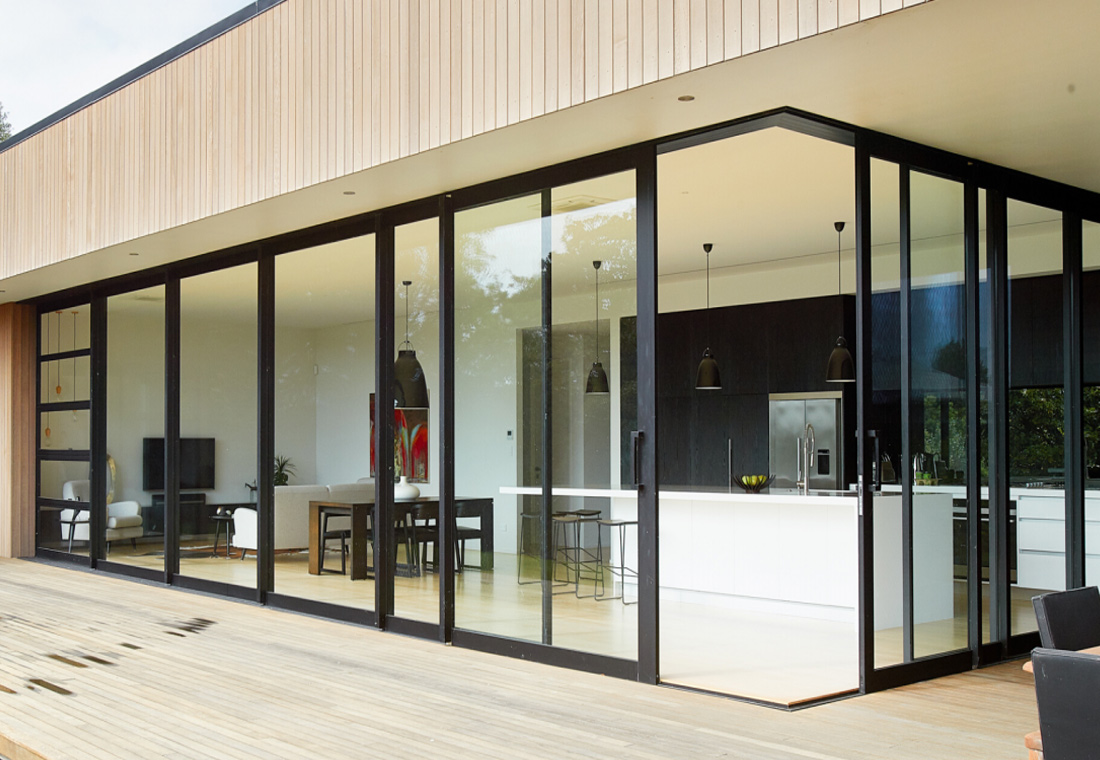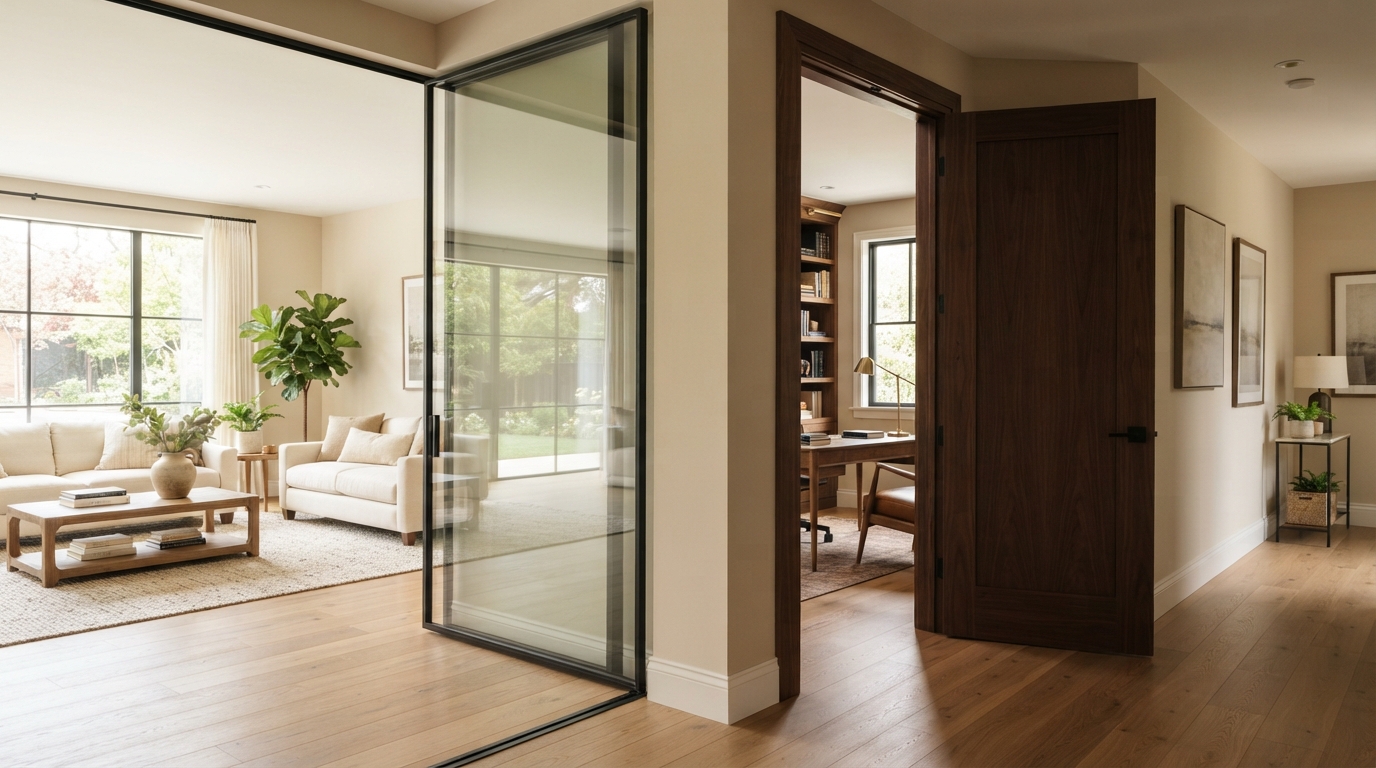
Doors do more than separate one room from another. Their material, finish, proportions, and amount of visual weight can change how open, bright, private, or formal an interior feels.
For modern homes, offices, apartments, and commercial interiors, interior glass doors often create a lighter and more architectural look because they allow sightlines and daylight to continue between spaces. Solid doors create a stronger visual boundary and can feel warmer, more private, traditional, or substantial.
Neither option automatically looks better. The right choice depends on whether you want the door to disappear visually, become a design feature, provide privacy, or create a clear separation between rooms.
Interior Glass Doors vs Solid Doors at a Glance
| Design Factor | Interior Glass Doors | Solid Doors |
| Visual openness | Excellent | Creates stronger separation |
| Light transfer | High | Very limited |
| Privacy | Depends on glass type | High |
| Modern appearance | Excellent | Depends on style |
| Traditional appearance | Possible, but less common | Excellent |
| Small-space appeal | Strong | Can feel visually heavier |
| Decorative flexibility | Glass, frames, textures, patterns | Paint, stain, panels, molding |
| Sound control | Depends heavily on construction | Often easier to optimize |
| Maintenance | Shows fingerprints more easily | Generally easier to hide marks |
| Best for | Open, bright, contemporary interiors | Private, quiet, clearly divided rooms |
The best-looking result comes from matching the door to the room rather than choosing based only on current design trends.
What Do Interior Glass Doors Add to a Room?
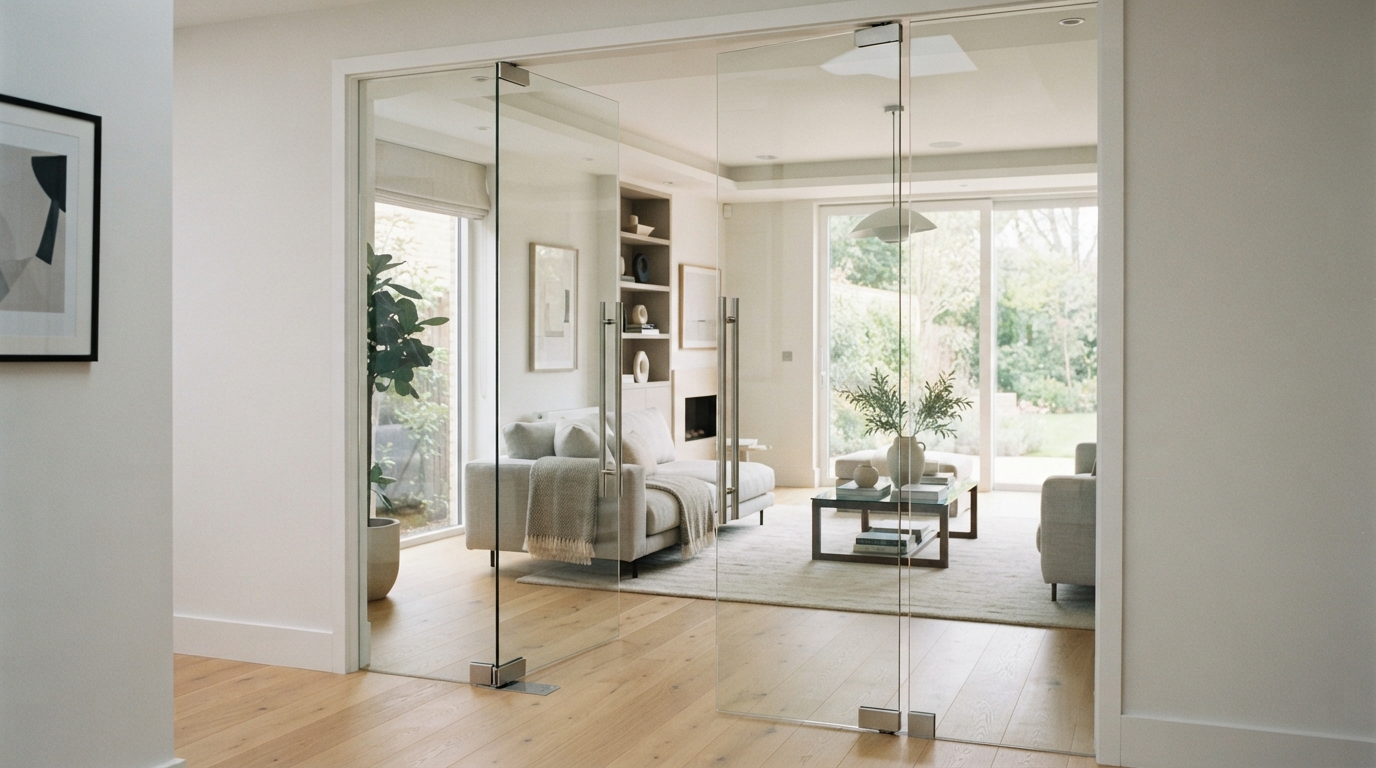
The biggest visual advantage of glass is that it separates a room without completely blocking it from the surrounding space.
A glass door can define an office, kitchen, hallway, conference room, or living area while allowing the eye to continue beyond the doorway.
This can make a floor plan feel:
- Larger
- Brighter
- More connected
- Cleaner
- More architectural
The National Glass Association notes that glazing is commonly used to support daylight and views in buildings, which is one reason glass is so effective when visual connection is part of the design goal.
Glass Reduces the Visual Weight of a Door
A solid door reads as a complete surface.
Even when painted the same color as the wall, it creates an obvious visual stop.
Glass behaves differently. Depending on the frame and glass type, it can appear almost transparent.
That makes interior glass doors especially useful in rooms where a full solid door would feel too heavy.
When Do Solid Doors Look Better?
Solid doors usually work better when the goal is to make rooms feel distinct and enclosed.
They can add:
- Warmth
- Weight
- Contrast
- Traditional detail
- Architectural character
A paneled wood door, for example, can become an important part of a traditional interior.
A flush painted door can create a minimal look without introducing transparency.
Solid Doors Work Especially Well in
- Bedrooms
- Bathrooms
- Closets
- Private offices
- Utility rooms
- Traditional homes
They are also useful when you want the doorway itself to disappear into the wall rather than attract attention.
A frameless-looking solid door painted to match the wall can be just as minimalist as glass, but in a very different way.
Which Makes a Small Space Look Bigger?
Glass usually has the advantage.
A small room often feels smaller when every wall and doorway creates a visual barrier.
Replacing one of those solid boundaries with transparent or partially transparent glass can extend the perceived depth of the room.
This Works Particularly Well Between
- Hallway and office
- Living room and study
- Kitchen and dining area
- Entry and adjacent room
- Interior room and corridor
The square footage does not change.
What changes is how much of the surrounding space the eye can see at one time.
Light Makes the Effect Stronger
If one room receives daylight and the adjacent room does not, a glass door can allow some of that light to travel farther into the interior.
That can make a darker corridor or interior office feel less enclosed.
Solid doors block this visual and lighting connection almost completely.
Clear Glass Creates the Most Open Look
Clear glass gives you the strongest sense of continuity.
You can see:
- Furniture
- Flooring
- Artwork
- Lighting
- Architectural details
This works particularly well when the rooms already share a consistent design style.
Clear Glass Looks Best When the View Is Worth Keeping
A clear glass door may be visually attractive between:
- Living room and home office
- Dining room and kitchen
- Conference room and hallway
- Showroom and private consultation area
It may be less appealing when the adjoining room contains storage, clutter, or equipment you would rather hide.
The view through the glass becomes part of the design.
Frosted Glass Gives You More Privacy
You do not have to choose between complete transparency and a solid door.
Frosted or etched glass can obscure the view while still allowing light to pass through.
That creates a useful middle ground.
Frosted Glass Can Work Well For
- Bathrooms
- Private offices
- Treatment rooms
- Meeting rooms
- Bedrooms with specific layouts
The level of opacity can vary considerably.
Some glass only softens details, while other treatments provide much stronger visual privacy.
Fluted and Reeded Glass Can Add More Character
Textured glass has become particularly useful in contemporary interiors because it gives you light transmission without a perfectly clear view.
Reeded or fluted glass distorts what is behind it through vertical or horizontal patterns.
Recent architectural examples show fluted glass being used specifically to allow light through while increasing privacy.
Why Designers Use It
It can add:
- Texture
- Movement
- Vintage character
- Soft privacy
- Stronger visual interest
A black-framed fluted glass door may feel contemporary and industrial.
The same glass inside a brass or warm-metal frame can feel much more decorative.
This makes textured glass more expressive than a simple clear panel.
Frame Design Changes the Entire Look
The glass itself is only part of the door.
The frame determines much of its visual character.
Black Metal Frames
Often create:
- Industrial character
- Strong geometry
- Modern contrast
- Loft-inspired appearance
Thin Minimal Frames
Create:
- Cleaner sightlines
- More glass visibility
- Lighter appearance
Wood Frames
Can soften the glass and make it work better in warmer residential interiors.
Frameless Glass
Creates the least visual interruption and often feels the most modern.
The ideal frame should relate to other finishes already in the space, such as windows, cabinetry, hardware, railings, and lighting.
Glass Doors Work Well With Open-Plan Interiors
Completely open floor plans are not always practical.
People still need to:
- Take calls
- Control noise
- Separate activities
- Create meeting spaces
- Close off kitchens or offices
Glass doors can provide physical separation without returning to the visual heaviness of a fully enclosed floor plan.
This is especially useful when the same interior needs to feel both open and organized.
A Glass Door Can Create a Room Without Making It Feel Isolated
For example, a home office behind glass remains visually connected to the living area.
A solid door creates a much stronger psychological separation.
Neither is wrong.
It depends on how much connection you want.
Solid Doors Provide Stronger Visual Privacy
Privacy is where solid doors have the clearest advantage.
A closed solid door tells people immediately that the room is separate.
Nothing inside is visible.
This makes solid construction naturally appropriate for spaces such as:
- Bedrooms
- Changing rooms
- Bathrooms
- Private offices
- Storage areas
With glass, privacy has to be intentionally designed through frosting, pattern, films, blinds, or another treatment.
What About Sound Privacy?
Glass can separate two spaces physically, but sound performance depends on much more than appearance.
Factors include:
- Glass thickness
- Laminated glass
- Door seals
- Frame construction
- Gaps around the door
- Wall construction
Architectural acoustic design is especially sensitive to how partitions, doors, and their surrounding assemblies are built. Simply dividing the room visually does not guarantee strong sound isolation.
Solid Does Not Automatically Mean Soundproof Either
A lightweight hollow-core solid door may provide less sound control than a properly specified glazed system.
A heavy solid-core door with good seals can perform much better.
If acoustic privacy is important, compare complete door assemblies rather than deciding from material alone.
Which Looks Better in a Home Office?
For many contemporary home offices, glass has a strong advantage.
It lets the office feel like part of the home even when the door is closed.
Clear Glass Works Well When
- Office stays organized.
- Natural light should move through the house.
- You want visual connection.
Frosted or Fluted Glass Works Better When
- Screens or paperwork need some privacy.
- You want light without full visibility.
- The office sometimes contains visual clutter.
A solid door may still be better if the office needs strong privacy or a quieter, enclosed atmosphere.
Which Looks Better Between a Kitchen and Dining Room?
Glass is often very effective here because these rooms are already visually connected in many modern layouts.
A glass door can control:
- Cooking smells
- Movement
- Some noise
while keeping the two spaces connected visually.
A steel-framed glass door can create an architectural focal point.
A solid door usually feels more traditional and may make sense when the kitchen is intended to remain visually separate.
What About Bedrooms?
Solid doors usually remain the stronger choice for bedrooms.
Privacy is more important than maximizing visual openness.
However, glass can work in specific situations, such as:
- Dressing-room entrance
- Walk-in closet
- Ensuite transition
- Private bedroom sitting area
In those locations, frosted, textured, or decorative glass may create a more interesting transition than another solid door.
Which Option Looks Better in Offices?
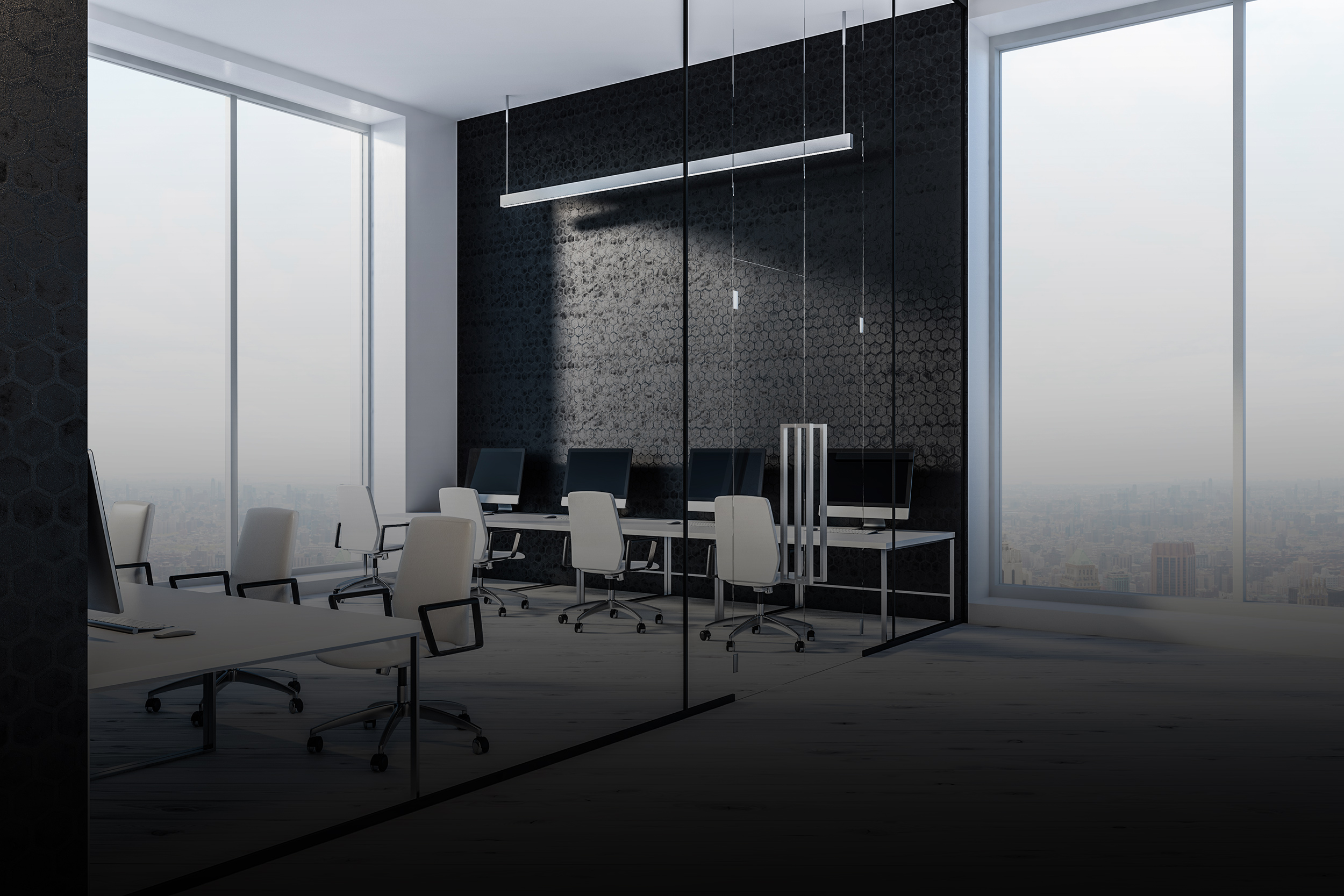
Commercial offices are one of the strongest applications for interior glass doors.
Glass can make offices feel:
- More transparent
- More collaborative
- Brighter
- Less compartmentalized
It also allows corridors and interior rooms to borrow daylight from spaces closer to windows.
Privacy Can Still Be Built In
Commercial glass doors may use:
- Frosted bands
- Full frosting
- Gradient film
- Textured glass
- Switchable privacy systems
This allows businesses to adjust how open each room should feel.
Conference rooms may use partial privacy while private offices use more obscured glazing.
Glass Safety Matters in Door Applications
A large glass door needs appropriate glazing for its location.
Doors are generally considered hazardous glazing locations because people can walk into, fall against, or impact them.
The National Glass Association explains that safety glazing used in hazardous locations must meet applicable safety standards and labeling requirements.
Tempered safety glass is commonly used for architectural door applications because it is specifically manufactured for areas where impact safety is a concern. The NGA also lists entrance doors, partitions, and other architectural applications among uses for fully tempered safety glass.
The exact glass specification should be determined by the door design and applicable building requirements.
Glass Requires More Visible Cleaning
This is one area where appearance can become a maintenance issue.
Clear glass shows:
- Fingerprints
- Dust
- Smudges
- Water marks
more readily than many painted or stained solid doors.
This is especially noticeable:
- Around handles
- In homes with children
- On heavily used office doors
Textured or frosted glass can hide some marks better than clear glass.
A solid matte-painted door generally requires less frequent visual cleaning.
Solid Doors Offer More Decorative Surface Area
Glass provides visual openness.
Solid doors provide a surface that can become part of the interior palette.
A solid door can be:
- Painted
- Stained
- Paneled
- Fluted
- Upholstered
- Detailed with molding
A dark solid door against light walls creates strong contrast.
A natural wood door adds warmth.
A flush door painted the wall color can nearly disappear.
So, while glass offers transparency, solid doors offer more freedom to use the door itself as a colored or textured design surface.
Which Door Style Fits Which Interior?
Modern Minimalist
Often works well with:
- Frameless glass
- Thin black frames
- Clear glass
- Frosted glass
- Flush solid doors
Industrial
Strong choices include:
- Black-framed glass
- Reeded glass
- Steel-look grids
- Dark solid doors
Traditional
Usually favors:
- Paneled wood doors
- Painted panel doors
- Decorative glazed doors with more framing
Transitional
Can combine:
- Slim framed glass
- Fluted glass
- Wood-framed glazing
- Simple solid panel doors
The overall architecture should lead the decision.
Interior Glass Doors vs Solid Doors: Room-by-Room Guide
| Room | Often the Better Visual Choice | Why |
| Home office | Glass | Keeps room connected and bright |
| Bedroom | Solid | Stronger privacy |
| Bathroom | Solid or frosted glass | Depends on privacy requirements |
| Dining room | Glass | Preserves visual connection |
| Kitchen | Glass | Separates without closing the space |
| Closet | Either | Depends on whether contents should be visible |
| Conference room | Glass | Open professional appearance |
| Storage room | Solid | Hides contents |
| Hallway office | Glass | Shares daylight |
| Living room divider | Glass | Keeps space visually open |
These are design tendencies rather than strict rules.
Choose Glass When You Want the Door to Feel Lighter
Interior glass doors usually look better when your priorities include:
- Natural light
- Open sightlines
- Contemporary design
- Visual connection
- Architectural transparency
- Making small rooms feel larger
Clear glass creates maximum openness.
Frosted and textured glass provide more privacy while maintaining much of the light and visual lightness.
Choose Solid When You Want Stronger Separation
Solid doors usually look better when the room needs:
- Privacy
- Visual enclosure
- Warmth
- Traditional character
- Strong color or wood texture
- A definite boundary
A solid door can also be the cleaner design choice when the room behind it is not intended to remain visually connected to the rest of the interior.
Which One Ultimately Looks Better?
The interior glass doors vs solid doors decision comes down to what the doorway should contribute to the room. Glass generally creates a brighter, lighter, more open and contemporary appearance, while solid doors provide more visual privacy, greater material presence, and stronger separation between rooms. Clear, frosted, fluted, framed, and frameless glass also make it possible to adjust how transparent or decorative the final design feels.
At NY Glazing Group, we create and install interior glass door and glazing solutions for residential and commercial spaces. We can help determine the right glass type, privacy level, frame style, and configuration based on how the room needs to look and function, whether the goal is a nearly transparent modern doorway or a more decorative glass feature.